
Turn your eye on patterns into a paid design career as a textile designer.
Textile Designer course gives you the studio craft, industry vocabulary, and career strategy that design school glosses over from production-ready repeat prints and woven structures to AI-assisted workflows, trend boards, and a portfolio that opens doors.
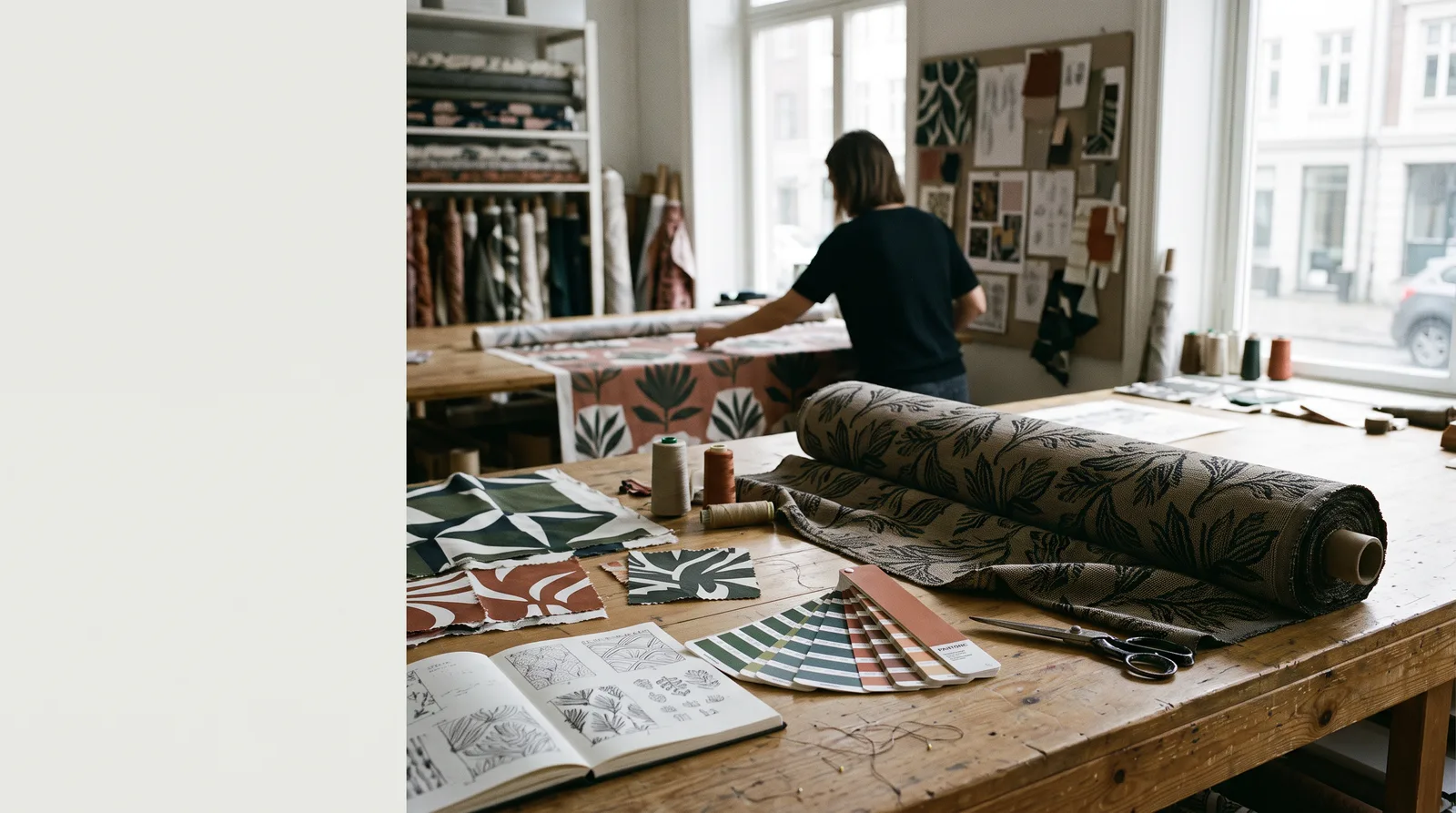
"I'm not here to romanticize the craft; I'm here to give you the insider knowledge that turns genuine talent into a working career."
— Jennifer Xue, StyleCareer.com lead course developer
What you'll learn
What you'll be able to do
- Design production-ready repeat prints — four-way, placement, and engineered — using Adobe Illustrator and AI generation tools such as Midjourney and Firefly
- Develop woven and knit design concepts with a working understanding of weave structures, gauge, and loom or machine capabilities
- Build a complete seasonal trend board by researching runway shows, forecasting services, and archive references and translating them into a coherent textile story
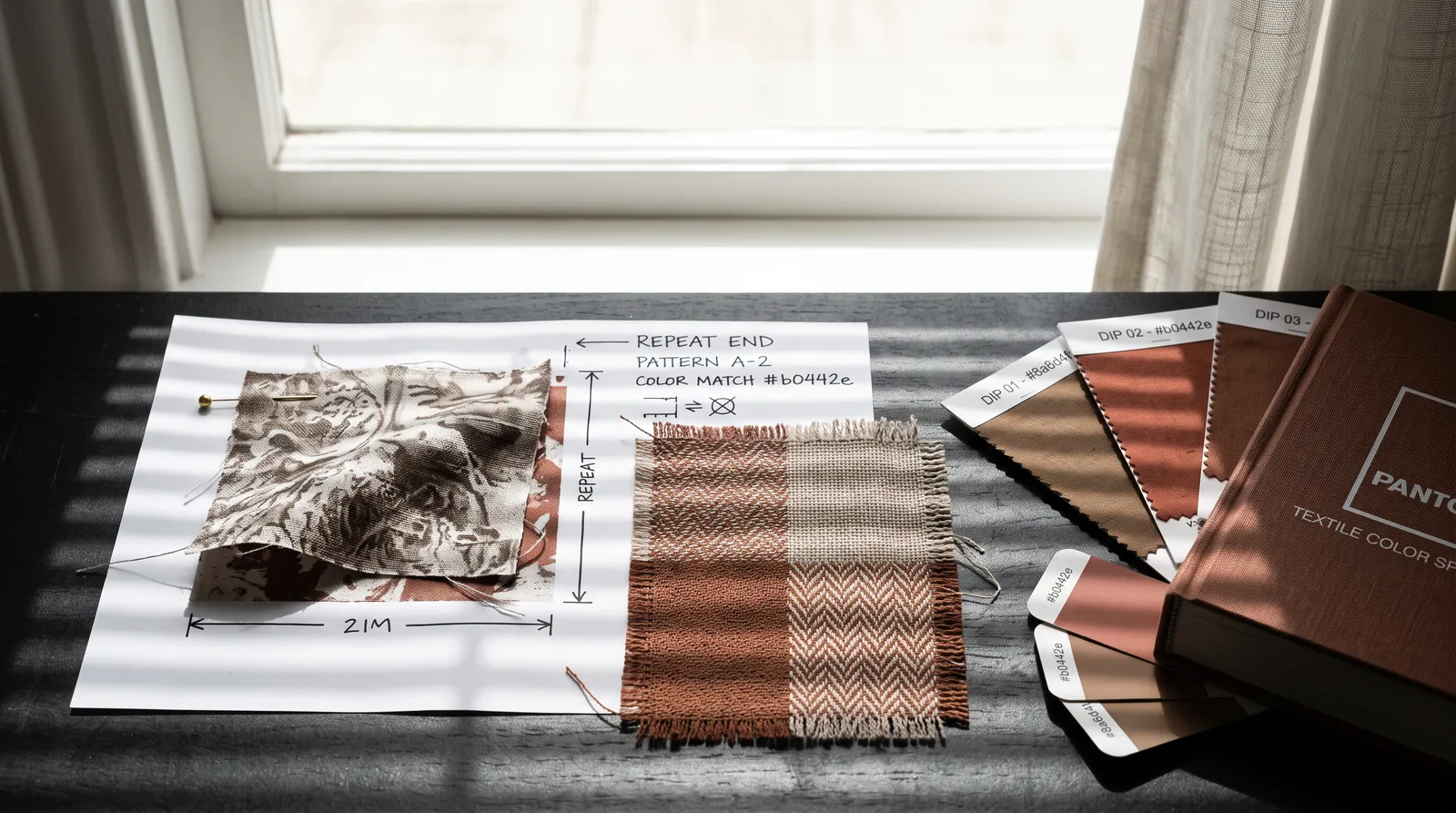
- Prepare professional mill-ready artwork packages including correct file specs, Pantone color matching, and a fully annotated tech pack
- Adapt a single print concept across multiple markets — apparel, home textiles, and activewear — demonstrating versatile commercial design thinking
- Launch a career-ready portfolio and personal brand across Instagram, Behance, and print licensing marketplaces, with a clear roadmap from first job to Design Director
How it works
A school that adapts to you
This isn't a set of static videos. Every lesson is generated live and tuned to where you actually are.
We learn your level
A quick placement check tailors your starting point so you're never bored or lost.
Lessons adapt as you go
Each lesson is written for your pace and your goal, adjusting as your skills grow.
Your AI coach keeps you moving
Checkpoints, feedback, and gentle nudges turn progress into a real result.
The curriculum
What's inside your school
12 modules · 48 lessons
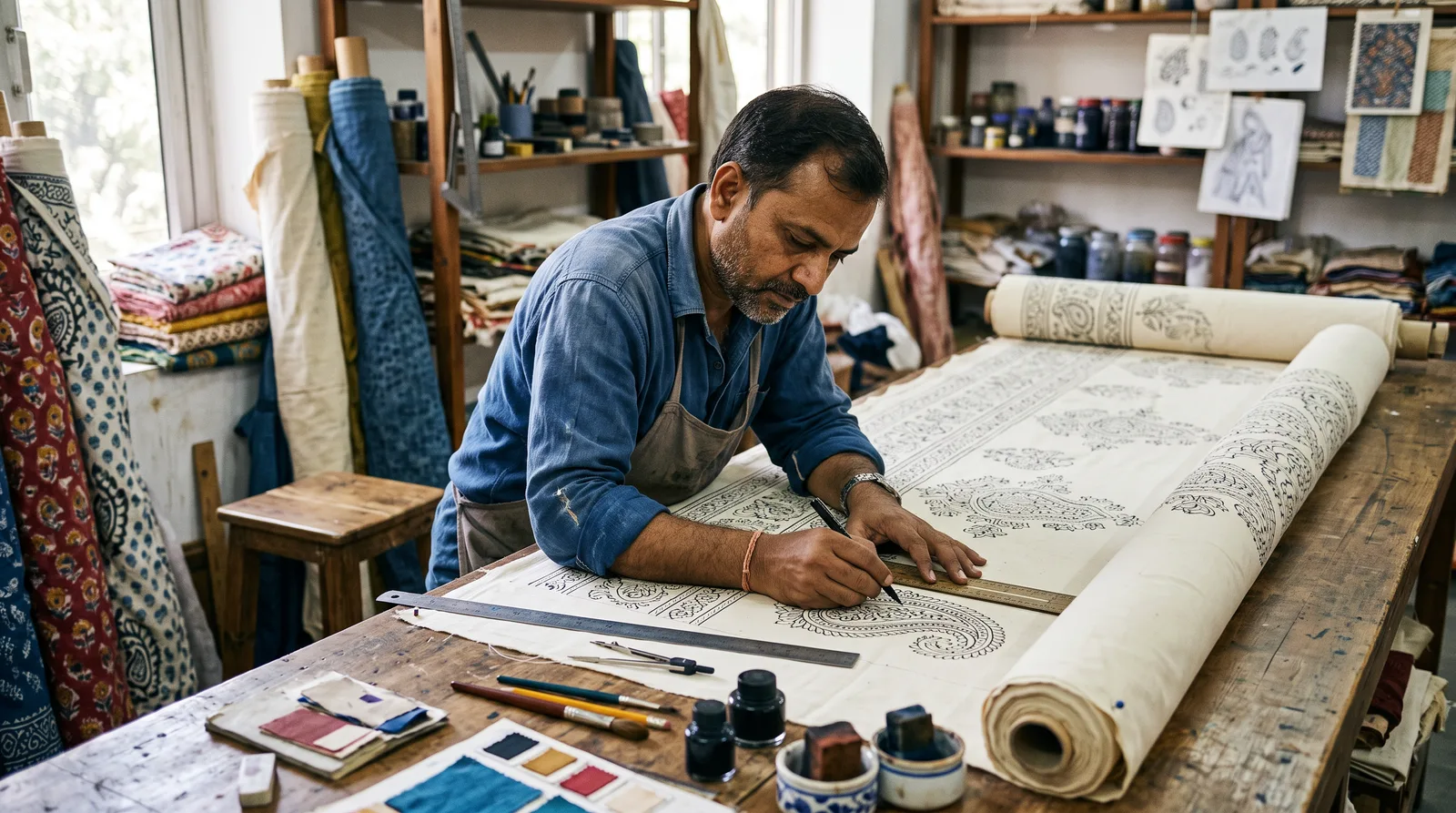
Myths & Realities of the Textile Designer Profession
Dismantles common misconceptions about textile design and paints an honest picture of who textile designers are and what they actually do.
- 1.1What a Textile Designer Actually Does (vs. What People Think)Included
- 1.2Myth-Busting: "It's Just Drawing Pretty Patterns" and Other MisconceptionsIncluded
- 1.3Textile Designer vs. Fashion Designer vs. Print Artist — Clarifying the ConfusionIncluded
- 1.4A Day in the Life: Real Textile Designers, Real WorkflowsIncluded
Foundations of Textile Design
Builds essential literacy in textile history, materials, design categories, and color — the bedrock knowledge every professional designer needs.
- 2.1The History and Evolution of Textile Design as a CraftIncluded
- 2.2Fiber, Yarn, and Fabric Construction Basics (Woven, Knit, Non-Woven)Included
- 2.3Core Design Categories: Prints, Wovens, Knits, EmbellishmentIncluded
- 2.4Color Theory and Colorways in Textile DesignIncluded
Print Design Fundamentals
Teaches the structural logic of repeat print design — from motif sketching through to a completed, production-aware repeat.
- 3.1Repeat Patterns: Types, Structure, and ScaleIncluded
- 3.2Motif Development: From Sketch to PatternIncluded
- 3.3Placement Prints, Borders, and Engineered DesignsIncluded
- 3.4Practical Exercise: Design a Four-Way Repeat PrintIncluded
Digital Textile Design Tools (with AI Tools)
Equips students with the industry-standard software and AI generation tools used in professional textile design studios today.
- 4.1Industry Software: Adobe Illustrator, Photoshop, and NedGraphicsIncluded
- 4.2AI-Assisted Pattern Generation: Midjourney, Stable Diffusion & FireflyIncluded
- 4.3Turning AI-Generated Concepts Into Production-Ready RepeatsIncluded
- 4.4Practical Exercise: Generate and Refine an AI-Assisted Print DesignIncluded
Woven & Knit Textile Design
Develops students' ability to design for woven and knit construction, with grounded knowledge of structures, gauge, and machine capabilities.
- 5.1Understanding Weave Structures: Plain, Twill, Satin, JacquardIncluded
- 5.2Knit Design Basics: Gauge, Stitch Types, and Pattern KnitsIncluded
- 5.3Designing for Loom and Knitting Machine CapabilitiesIncluded
- 5.4Practical Exercise: Develop a Woven or Knit Design ConceptIncluded
Fabric Development & Sourcing
Covers the mill relationship cycle — from understanding fiber performance to commissioning samples and sourcing sustainably.
- 6.1Understanding Fiber Properties and Performance CharacteristicsIncluded
- 6.2Working with Mills: Sampling, Lab Dips, and Strike-OffsIncluded
- 6.3Sustainable and Innovative Textile SourcingIncluded
- 6.4Practical Exercise: Build a Fabric Development BriefIncluded
Trend Forecasting for Textiles
Trains students to read, research, and translate seasonal trend direction into a coherent textile story.
- 7.1How Textile Trends Are Forecasted (Color, Print, Texture)Included
- 7.2Researching Seasonal Direction: Shows, Forecasting Services, ArchivesIncluded
- 7.3Translating Trend Direction Into a Print/Textile StoryIncluded
- 7.4Practical Exercise: Build a Seasonal Textile Trend BoardIncluded
Designing for Different Markets & End Uses
Develops commercial versatility by teaching students to adapt their design thinking across apparel, home, activewear, and luxury markets.
- 8.1Apparel vs. Home Textiles vs. Technical TextilesIncluded
- 8.2Designing for Fast Fashion vs. Luxury vs. ActivewearIncluded
- 8.3Scaling Design Across Product CategoriesIncluded
- 8.4Practical Exercise: Adapt One Print Across Three Product TypesIncluded
Technical Specifications & Production Handoff
Ensures students can deliver mill-ready artwork packages that meet professional file, color, and documentation standards.
- 9.1Preparing Artwork Files for Mills and FactoriesIncluded
- 9.2Color Matching, Pantone Systems, and Strike-Off ApprovalIncluded
- 9.3Repeat Sizing, Resolution, and File StandardsIncluded
- 9.4Practical Exercise: Build a Production-Ready Tech Pack for a PrintIncluded
AI & Technology Transforming Textile Design
Examines the broader AI design stack — from generative tools to sustainable material discovery — and the ethical responsibilities that come with it.
- 10.1The AI Textile Design Stack: Generative Print Tools and Pattern EnginesIncluded
- 10.2Using AI for Colorway Variations and Trend-Responsive DesignIncluded
- 10.3AI in Sustainable Textile Innovation and Material DiscoveryIncluded
- 10.4Ethical Considerations: Originality, Copyright, and AI-Generated PrintsIncluded
Building Your Portfolio & Personal Brand
Guides students in curating a compelling portfolio and establishing a professional online presence across key industry platforms.
- 11.1What a Textile Design Portfolio Should IncludeIncluded
- 11.2Presenting Repeats, Colorways, and Development ProcessIncluded
- 11.3Building an Online Presence: Instagram, Behance, and Print MarketplacesIncluded
- 11.4Practical Exercise: Assemble Your Textile Design PortfolioIncluded
Breaking Into the Industry & Career Growth
Provides a practical roadmap for landing first roles, licensing work, building industry relationships, and growing toward a senior career.
- 12.1Entry Points: Print Studio Assistant, In-House Designer, FreelanceIncluded
- 12.2Licensing Your Designs: Working with Print Studios and AgenciesIncluded
- 12.3Networking at Textile Trade Shows and MillsIncluded
- 12.4Career Pathways: From Junior Designer to Textile Design DirectorIncluded
Who it's for
Is this you?

Fresh print graduates
You have the degree but not the industry decoder ring — this lab translates your studio education into production-ready skills and a portfolio employers actually respond to.

Self-taught pattern makers
You've been creating repeats and selling on Spoonflower or Society6, and you're ready to understand the professional craft behind what you've been doing intuitively.

Fashion designers going deeper
You've been working with fabric but want to design it — this course clarifies exactly where textile design ends and fashion design begins, and builds your skills on the textile side.

Junior designers leveling up
You landed your first studio role but the talk of weave structures, tech packs, and trend boards sometimes leaves you nodding along — this fills every gap with professional precision.

Tech-curious creatives
You want to use AI tools like Midjourney and Firefly professionally and ethically, not just experiment with them — and you need to understand how they fit into a real production workflow.

Career-changers with a creative eye
You're pivoting from graphic design, illustration, or another visual field and need to understand what makes textile design its own distinct discipline with its own craft language.
Questions
Frequently asked
Your teacher
A note from your teacher

Jennifer Xue of StyleCareer.com
If you're reading this, you probably already see the world in patterns. You notice the repeat on a restaurant banquette. You pull apart the weave structure of a shirt at the store. You screenshot runway textile details that nobody else in the room clocked. That eye is real, and it matters. But somewhere between that eye and an actual career, there's a wall and I know exactly what's on that wall, because I've watched it stop talented people who had everything they needed except the roadmap.
The textile industry has a translation problem. It speaks a language of tech packs, strike-offs, lab dips, gauge, and Pantone references and design school, if you went, mostly taught you the romantic version. The version where you sketch beautiful things and somehow they become fabric. The day-to-day reality of a working textile designer is far more precise, more collaborative, and honestly more interesting than that but nobody hands you the decoder ring.
That's what Textile Design Lab is. It's the insider knowledge I wish had been packaged and handed to me: what a textile designer actually does versus what people imagine, how repeat mechanics really work, what mills need from you in a file, how to build a trend story that's coherent rather than a mood board of pretty images, and how to use AI tools like a professional rather than a person hoping autocomplete does the creative thinking. Every section is built around what you'll actually be asked to do in a studio or as a freelancer, not academic exercises, but real deliverables.
I want to be straight with you about something: this course will challenge some ideas you might have about the craft. "It's just drawing pretty patterns" is a myth we dismantle in the very first lesson, and we don't go back to comfortable half-truths. But the flip side is that by the end, you'll have production-ready work in your hands, repeat prints with correct file specs, a seasonal trend board grounded in real research, a tech pack a mill can actually use, and a portfolio built to get you in the room. Not aspirational work. Real work.
Whether you're pivoting from a related design field, graduating and trying to make sense of the industry, or entirely self-taught and wondering if you can really do this without a degree; you belong here. The industry needs designers who understand the full stack: the craft, the tools, the market, and the business of it. That's what we build together. I can't wait to see what you make.
— Jennifer Xue of StyleCareer.com
Start your journey today
Get instant access — learn at your own pace with an AI coach in your corner.
$39/mo
Recurring billing · cancel anytime
Secure checkout · Instant access
- 12 modules, 48 lessons
- AI-adaptive lessons tuned to your level
- Quizzes & checkpoints to lock in progress
- Your own AI learning coach
- Learn on any device, at your pace
- Full access for as long as you're subscribed